
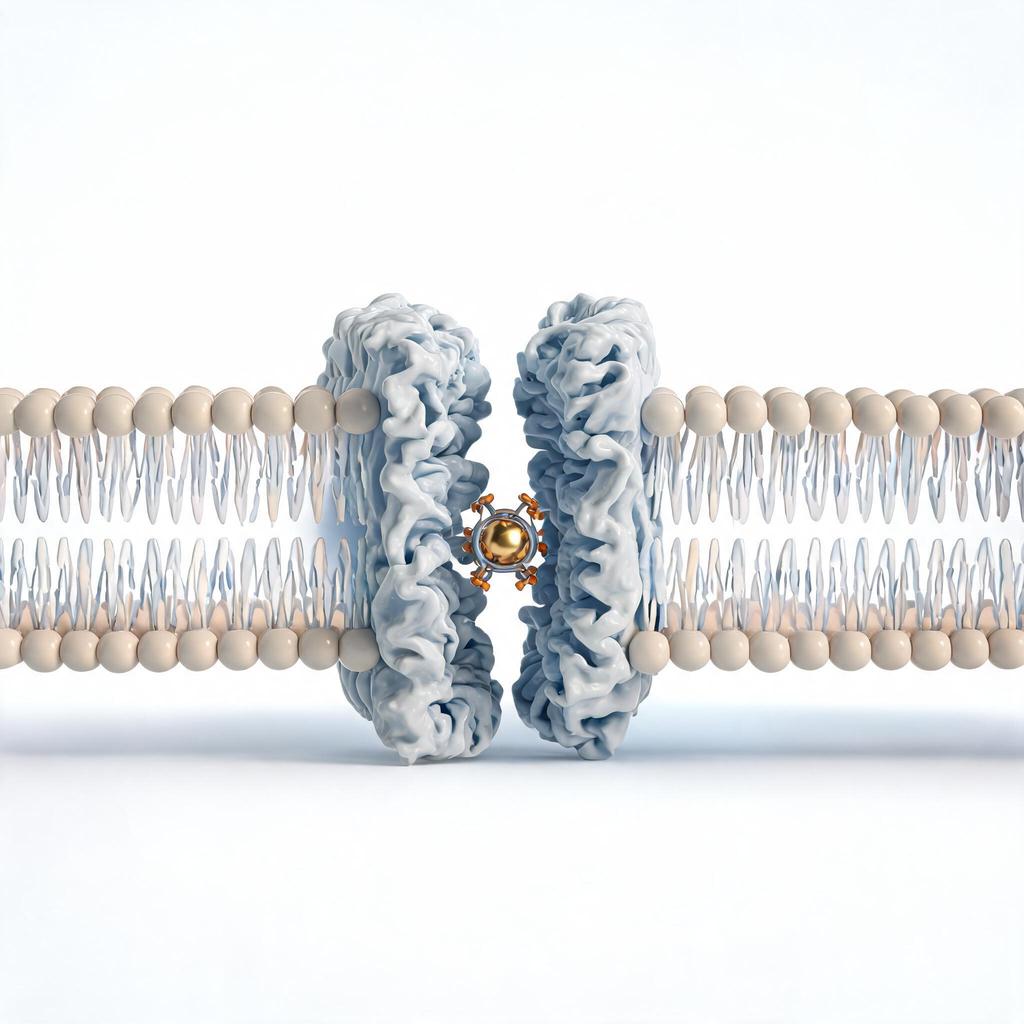
The Kinetic Advantage of Organic Chelation: Mastering Intestinal Active Transport Mechanisms
In the competitive landscape of dietary supplement manufacturing, bioavailability is the ultimate determinant of product efficacy. For formulators and procurement specialists, understanding the intestinal active transport mechanism of trace elements is not merely academic—it is a critical supply chain variable that dictates dosage size, capsule count, and ultimately, consumer retention. At LumenAxys™, we engineer high-purity Zinc Picolinate specifically to exploit these biological pathways, ensuring that every milligram of raw material translates into measurable physiological impact.
1. The Dual-Pathway Architecture of Zinc Absorption
To understand why organic chelates outperform traditional inorganic salts (such as zinc oxide or sulfate), one must first map the architecture of intestinal zinc uptake. Exogenous zinc enters the gastrointestinal tract and faces two primary routes at the brush border membrane of the enterocytes:
- Passive Paracellular Transport: A non-saturable process where free Zn2+ ions diffuse through tight junctions. This pathway is highly susceptible to interference from phytates and fiber, which precipitate zinc before it reaches the absorption site.
- Active Transcellular Transport: A saturable, energy-dependent process mediated by specific transporter proteins. This is the high-efficiency corridor that premium supplements aim to utilize.
For OEM partners targeting clinical-grade outcomes, the focus must be on optimizing the transcellular route. This requires a substrate that resists precipitation and mimics the structural characteristics of endogenous zinc peptides.
2. Exploiting the hPepT1 Proton-Coupled Peptide Carrier
One of the most significant advantages of small-molecule organic chelates like picolinic acid is their ability to hijack the hPepT1 (Human Peptide Transporter 1). While designed primarily for di- and tri-peptides, hPepT1 exhibits cross-reactivity with certain organic acid-metal complexes.
"The proton gradient across the apical membrane drives the co-transport of the chelated complex. By maintaining the zinc atom within a stable organic ligand, LumenAxys™ prevents the dissociation of Zn2+ in the acidic lumen, allowing the intact complex to be recognized by the carrier system."
This mechanism is crucial for formulators dealing with Gastrointestinal Tolerance. Free Zn2+ ions are notorious for causing gastric irritation and nausea when taken on an empty stomach. By keeping the metal sequestered within the picolinate ring until it reaches the optimal pH environment of the duodenum, we achieve a "zero-stimulation" profile. This is a decisive advantage for products targeting Vegan & Clean Label Formulas, where consumers expect minimal side effects alongside high potency.
3. The Basolateral Exit: Role of ZnT5B and ZnT1
Absorption is only half the battle. Once inside the enterocyte, the zinc must be released from its ligand and transported across the basolateral membrane into the portal blood. Here, the ZnT family of transporters takes over.
The Critical Role of ZnT5B
Recent pharmacokinetic studies highlight ZnT5B (a splicing variant of ZnT5) as a key mediator in the efflux of zinc from the cytoplasm to the bloodstream. Unlike passive diffusion, this active extrusion ensures that zinc concentrations in the serum rise rapidly after ingestion. For B2B buyers validating Serum & RBC Zinc Concentration data, this explains the sharp peak observed in plasma levels following supplementation with organic chelates compared to the flat, delayed curve seen with inorganic salts.
Intracellular Sequestration via Metallothionein
Upon entering the systemic circulation, zinc binds to Metallothionein (MT), a cysteine-rich metal-binding protein. MT acts as both a buffer and a delivery vehicle, distributing zinc to target tissues such as muscle and immune cells. The efficiency of this distribution relies on the initial purity of the raw material. Any heavy metal impurities (Pb, Cd, Hg) present in low-grade zinc sources will compete for MT binding sites, potentially leading to toxic accumulation rather than therapeutic benefit. This is why LumenAxys™ enforces strict Heavy Metals Control, ensuring Pb < 1 ppm and full compliance with California Prop 65.
4. Overcoming Antagonistic Interference: The Phytate Barrier
In real-world consumption scenarios, zinc is rarely ingested in isolation. It competes with dietary components such as phytates (found in grains and legumes) and calcium. Inorganic zinc forms insoluble complexes with phytates (Zn-phytate), effectively rendering them bio-unavailable.
The Anti-phytate Interference capability of Zinc Picolinate stems from its thermodynamic stability. The bond energy between the picolinic acid ligand and the zinc ion is significantly higher than that of phytic acid. Consequently, even in the presence of high-fiber diets, the chelate remains intact long enough to reach the active transport sites of the jejunum and ileum. For manufacturers developing ZMA Sports Nutrition blends, this stability is vital. Athletes often consume pre-workout meals rich in plant-based proteins; using an inorganic salt would result in massive zinc loss, whereas our chelate maintains its integrity, ensuring the intended recovery benefits are delivered.
5. Implications for OEM Formulation Design
Understanding these transport mechanisms allows formulators to optimize several key parameters:
- Dosage Optimization: Because the active transport mechanism has a saturation point (Km value), increasing the dose beyond a certain threshold does not linearly increase absorption. However, because the chelate bypasses passive precipitation losses, the effective dose required to hit the therapeutic window is lower than with inorganic salts. This allows for smaller capsule sizes, improving patient compliance.
- Ingredient Compatibility: When formulating Immunity Support Capsules containing Vitamin C and D3, the organic nature of Zinc Picolinate prevents unwanted chemical reactions with other functional ingredients during storage. Its hygroscopicity is managed through rigorous Loss on Drying controls (≤ 4.0%), ensuring the powder remains free-flowing for High-speed Capsule Filling.
- Taste Masking: For Chewables and Gummies, the absence of free metal ions eliminates the metallic astringency (metallic涩味) often associated with zinc carbonate or oxide. This simplifies the flavoring process and reduces the need for excessive sugar or sweetener masking.
6. Quality Control: Validating the Transport Potential
Not all "chelates" are created equal. The efficacy of the active transport mechanism depends on the purity and crystal structure of the final API. LumenAxys™ employs USP & EP Pharmacopeia Compliance standards to ensure that our Assay is ≥ 99.0%. We utilize ICP-MS for elemental profiling and HPLC for ligand verification, guaranteeing that the ratio of picolinic acid to zinc is stoichiometrically precise. Deviations in this ratio can lead to incomplete chelation, exposing free Zn2+ ions that may precipitate prematurely in the gut, thereby negating the benefits of the active transport pathway.
Frequently Asked Questions (FAQ) for B2B Procurement
Q1: How does the active transport mechanism of Zinc Picolinate differ from Zinc Citrate?
While both are organic chelates, Zinc Picolinate generally demonstrates superior stability against phytate interference due to the stronger coordination bonds of the picolinic acid ligand. Additionally, the particle size and flowability of our micro-crystalline Zinc Picolinate are optimized for direct compression and high-speed filling, offering better manufacturability for large-scale OEM operations.
Q2: Does the presence of other minerals (like Magnesium in ZMA) affect the active transport of Zinc?
Competitive inhibition can occur if divalent cations (Mg2+, Ca2+) are present in excess at the same site. However, because Zinc Picolinate is absorbed via a specific peptide-like transport pathway (hPepT1) in addition to standard metal transporters, it is less susceptible to competition from magnesium citrate compared to inorganic zinc salts. We recommend formulating with time-release matrices or separate capsules if extremely high doses of competing cations are used.
Q3: What documentation do you provide to support claims of enhanced bioavailability?
LumenAxys™ provides comprehensive Certificates of Analysis (CoA) including Assay, Heavy Metals, and Loss on Drying. We also supply third-party published literature references detailing the pharmacokinetic profiles of Zinc Picolinate, specifically highlighting serum zinc peaks and half-life comparisons against inorganic controls. This data supports your regulatory filings and marketing claims regarding superior absorption.
Q4: Is Zinc Picolinate suitable for vegan and allergen-free labels?
Yes. Our production process utilizes synthetic picolinic acid and food-grade zinc sources. We do not use animal-derived binders or fillers. The final product is certified free from common allergens (gluten, dairy, soy, nuts), making it ideal for Vegan & Clean Label Formulas. We provide full traceability documents for all raw material inputs to satisfy stringent audit requirements.